



Welcome to our 2026 Kootenay Boundary Division of Family Practice *virtual* Annual Report. Here, we warmly invite you explore our strategic directions & to learn more about our collective impact over the past year.

 |  |
A year ago, we set an ambitious North Star: All Kootenay Boundary residents have access to quality primary care by 2028.
We knew the challenge was significant. Too many residents were without a longitudinal family practitioner, while many of those already attached faced long waits for appointments. Our practitioners and clinic teams were working hard to meet growing patient needs, often at the expense of their own well-being.
One year in, we've gained significant momentum.

After years of persistent shortages, we're approaching something that once seemed impossible: sufficient practitioner supply to make full longitudinal attachment in KB a realistic possibility.
Over the past 18 months, we've welcomed 39 new practitioners to Kootenay Boundary, including 29 physicians and 10 nurse practitioners, 12 of whom were recruited internationally, more than triple our historic average of recruited practitioners in any year. At the same time, the number of people on our Health Connect Registry has fallen dramatically, from more than 10,000 to fewer than 3,000.
Some favourable circumstances have helped. Changes to physician compensation and geopolitical uncertainty have increased interest in family practice in BC. But opportunity only matters if you're ready to seize it. Our recruitment team, working alongside practitioners, clinics and community partners, has pursued every promising opportunity with unrivaled dedication, persistence and a genuinely welcoming approach.
This collective achievement is worth celebrating.
We're not declaring victory. Practitioner needs vary across communities and clinical services, recruitment must continue, and we recognize that the improving regional picture doesn't necessarily reflect what practitioners are experiencing in their clinics yet. Long appointment waits, requests to expand panels and demanding workloads remain everyday realities.
But the possibility of full attachment is coming into view.

Behind every attachment number, appointment request and clinic waitlist is a person. In Kootenay Boundary, these aren't just patients. They're our neighbours, friends, colleagues and families.
Our North Star is ultimately about them. Ensuring that every person in Kootenay Boundary can access equitable, quality primary care when they need it. And ensuring that the practitioners and teams providing that care have the support, time and capacity to do so sustainably.
For years, much of our attention has understandably focused on getting people attached to a family practitioner. That remains essential. But attachment is the foundation, not the finish line.
The real promise of primary care is about timely, equitable, appropriate and sustainable access to the quality care that our practitioners and teams already deliver every day.
A patient who waits weeks for an appointment may have an excellent family practitioner, but they're not getting the timely access they need. Equally, a practitioner trying to meet every patient's needs through longer days, growing backlogs and after-hours work is not operating in a sustainable system.
These are not competing interests. They're fundamentally connected.

Improving timely access is our first major priority in this next phase.
Not by asking practitioners to work harder or simply see more patients, but by helping clinics make better use of their existing capacity.
Our new LIFT Clinic Capacity Collaborative brings practitioners and clinic teams together to learn, test and adapt practical changes to how care is delivered.
The objective is straightforward: shorter waits and better access for patients, alongside more predictable days (and yes, vacations without the pile-up), better-supported teams and less work following practitioners home.
With funded participation and hands-on support, clinics will explore approaches suited to their own circumstances, from managing appointment demand and backlogs to improving patient flow, urgent access and coverage when colleagues are away.
A sincere thank you to the practitioners and clinic teams who have stepped forward to join the LIFT Clinic Capacity Collaborative and help us break trail toward better access and more sustainable practice in Kootenay Boundary.

Even as attachment improves, some residents will continue to face barriers to accessing care, including people whose needs may not fit easily within traditional clinic models.
Over nearly two years, KB Access has demonstrated the value of a flexible, shared-care approach for unattached patients, including those affected by unexpected physician departures. By bringing practitioners together in a group practice model, the service has helped fill important gaps while sharing responsibility for care across a team.
Meanwhile, our Primary Care Network (PCN) is entering a new phase. With limited prospects for additional resources, the focus is increasingly on making the most of what we have: strengthening interdisciplinary workflows, expanding group programming, improving equitable access to services across clinics and ensuring team members can contribute their skills where they bring the greatest value.
Underpinning these efforts is the practical, everyday support that helps clinics function. From EMR transitions, digital health and emerging AI tools to clinic management, administrative team development, peer learning and support for evolving clinic models, our Division continues to work alongside practitioners and their teams to optimize practice at the grassroots level.

Welcoming new practitioners to Kootenay Boundary is something worth celebrating. Just as important is continuing to make this a place where all our practitioners, whether newly arrived or long established, can enjoy rewarding, sustainable careers and fulfilling lives.
That means more than attractive surroundings and a great lifestyle. It means manageable workloads, supportive teams, opportunities to learn and grow, and strong professional and personal connections.
This is why our work to improve clinic capacity and support team-based care matters so much. It's not simply about improving access for patients. It's also about creating the conditions for practitioners to do the work they find meaningful, with the time, support and balance they need.
It's also why we're investing in the connections that make our medical community stronger. Knowing the people you practise alongside, having someone to call when you need advice, and feeling part of a community that supports one another makes a real difference. From local working dinners and Peer-to-Peer conversations to welcome events and our successful Specialty Speed Dating initiative, we're creating opportunities to share knowledge, build relationships and enjoy the company of colleagues.
No single organization is in charge of our primary care system. Yet achieving equitable, integrated care is a responsibility we share. That means collaboration must be more than goodwill. It requires shared priorities, accountability and a commitment to making progress together.
We're strengthening coordination between our Division Board, PCN Steering Committee and Collaborative Services Committee, with Indigenous partners and patient voices integral to governance and decision-making at every level.
We're also supporting Family Medicine Departments to strengthen local leadership and resource planning, with a plan completed for Trail and work progressing in Castlegar.
This isn't governance for its own sake. These collaborative structures are the cornerstone of making meaningful progress toward our North Star.

Our North Star has momentum. Now we have the opportunity, and the responsibility, to translate that into something lasting.
- Equitable access to quality care for every resident.
- Sustainable, rewarding practice for practitioners.
- Even stronger teams and a medical community we're proud to belong to.
Thanks to our members, clinic teams, Indigenous partners, patients and community partners for your help, guidance and hands-on support in making it happen.

📽 This short video features these strategic directions and highlights collective impacts from the past year.

Our North Star is taking shape through the collective efforts of practitioners, clinic teams, Division staff and partners across Kootenay Boundary.
Here's a closer look at what we've accomplished over the past year, what's underway and what's next across our four core strategic initiatives, along with the supporting work that helps make it all possible.
 🔶 Full attachment is within sight. Over the past 18 months, we've welcomed 39 new practitioners to Kootenay Boundary, including 29 physicians and 10 nurse practitioners, 12 of whom were recruited internationally. That's a significant leap from our historical norms of 8–10 new practitioners annually, reflecting the combined efforts of our recruitment team, local clinics, practitioners and community partners.
🔶 Building capacity across KB. Those 39 new practitioners represent a net increase of 32 FTE in practitioner capacity, helping bring longitudinal care to thousands of KB residents.
🔶 From recruitment to retention. With an estimated system-wide cost of $40,000–$95,000 to recruit a single practitioner, retaining the talent we've attracted is more important than ever. Our evolving focus is on creating the conditions where practitioners and their families feel settled, supported, connected and valued, with rewarding careers and fulfilling lives in KB.
 🔶 Testing practical approaches to better appointment access. Pilot project with a local clinic to test improvements to urgent appointment triage and online booking, using a combination of workflow changes and patient education to help patients access the right care at the right time.
🔶 Building momentum for better clinic capacity. Ran a six-week email campaign introducing practitioners and clinic teams to practical approaches for improving access, managing appointment demand and making better use of existing capacity. The campaign aimed to inspire participation and lay the groundwork for KB's first region-wide, peer-to-peer LIFT Clinic Capacity Collaborative.
🔶 Eight clinics. One shared commitment to improve access. Our first LIFT Collaborative is fully subscribed, with eight clinics bringing together practitioners, clinic managers and MOAs to learn from one another and put improvements into practice. The Collaborative officially launches November 27, 2026.
🔶 Helping clinics work differently, not harder. The LIFT Clinic Capacity Collaborative will support participating clinics to test and adapt practical improvements, including increasing appointment availability, reducing avoidable demand, managing variations in appointment needs and protecting appointment supply, and addressing backlogs and unnecessary future visits. The goal: shorter waits for patients, calmer clinic days and more sustainable workloads for practitioners and teams.

🔶 A major step toward full attachment. Over the past 12 months, 7,214 Kootenay Boundary residents have been connected with a family practitioner through the KB Health Connect Registry (KBHCR.ca), reducing the number of residents on the registry by 53%.
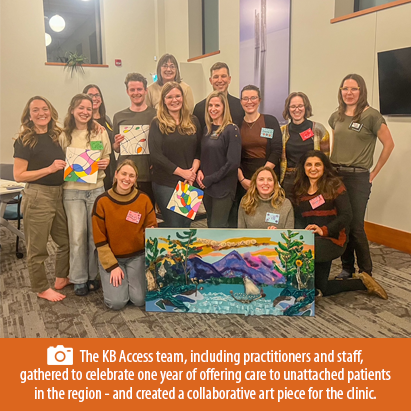
🔶 KB Access is making a difference. Since launching in January 2025, KB Access has provided care to 2,380 unique unattached patients, already surpassing the halfway point toward our North Star target of 4,600 patients by 2028. From helping patients who have gone years without regular care to stepping in when communities like Midway experience sudden physician departures, KB Access is filling critical gaps in primary care across the region.
🔶 Helping patients avoid emergency visits. According to our 2025 KB Access Patient Experience Survey, 71% of respondents agreed that care received through KB Access helped them avoid an emergency department visit. Of those patients, 65% reported avoiding two or more visits.
🔶 Shared care that works. KB Access's group practice model brings together a dedicated roster of physicians to share responsibility for unattached patients, with positive feedback from both patients and practitioners. The model also offers flexible opportunities for local physicians and visiting locums to contribute. With one in five appointments involving a new patient, the team continues to meet the particular challenges of caring for people without an established practitioner.
🔶 Evolving to meet changing needs. As recruitment succeeds and the number of unattached patients declines, we're exploring the next chapter for KB Access. Working with communities, we're identifying where this established infrastructure and shared-care model can make the greatest difference, particularly for vulnerable patients whose needs may not fit traditional clinic models, and communities facing unexpected gaps in care.
 🔶 A stronger foundation for primary care. Our Primary Care Network (PCN) has brought 50 practitioners representing 44 FTE across nursing, social work and allied health disciplines into primary care, delivering over 24,000 encounters per year and well over 100,000 encounters in the last five years across Kootenay Boundary. By embedding team members directly within clinics, we've built an integrated model of care that's making a meaningful difference for patients and practitioners alike.
🔶 Better access to the right care. From nursing procedures and chronic disease management to mental health support, physiotherapy and specialized services, PCN team members are helping patients get timely, comprehensive care without always needing a physician appointment. This is particularly valuable for patients with complex health and social needs.
🔶 Better-supported practitioners and clinics. Team-based care is helping practitioners share the workload, focus on patients who need their expertise most, and build more sustainable practices. The benefits extend to recruitment and retention. For a practitioner considering a career in KB, the opportunity to work alongside a supportive interdisciplinary team can make all the difference.
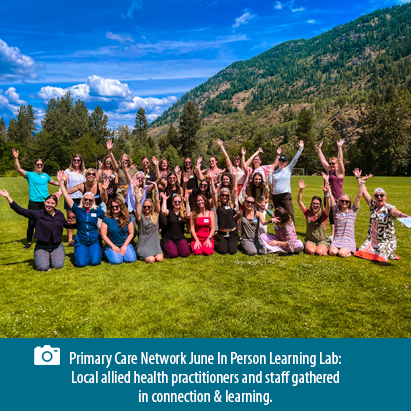
🔶 Learning and improving together. Our PCN Learning Labs continue to bring physicians, NPs and interdisciplinary team members together to share experiences and improve how team-based care works. Two in-person, all-member Learning Labs were held this year, and a new monthly Hot Topics series launches December 2, creating more opportunities for practitioners to help shape improvements.
🔶 Taking team-based care further. Our work now focuses on strengthening interdisciplinary workflows, expanding group programming, increasing patient encounters and improving equitable access across clinics, including exploring ways to extend high-demand physiotherapy and occupational therapy services.
🔶 Stronger partnerships for our North Star. The PCN Steering Committee is also evolving into a broader primary care partnership table, bringing together the Division, Interior Health, Indigenous partners and patients to collaborate on shared priorities and help advance our North Star.

🔶 Practical digital health support. Supported three EMR migrations since April 2026, ongoing forms creation and clinic workflow improvements, while exploring ways to reduce administrative burdens on practitioners.
🔶 Preparing clinics for the next wave of AI. Developing a practical roadmap to help clinics safely adopt emerging AI tools, from patient-facing services and clinical decision support to front-office automation.
🔶 Supporting sustainable clinics. Worked with practitioners and community partners on clinic development and transitions in Midway and Revelstoke, including a proposed shared-practice model for Midway and Greenwood to improve stability, cross-coverage and continuity of care.
🔶 Connecting clinic managers. Held two Clinic Managers' Retreats, bringing managers and office leads together to share knowledge, strengthen regional connections and access practical resources.
🔶 Building MOA skills. Delivered three online training sessions covering Advanced Profile EMR, Gender Affirming Care and Med Access, and supported a provincial training session on billing.
🔶 Making space for Peer-to-Peer conversations. Brought practitioners together for informal discussions on AI, BIPOC experiences in practice, NP work-life balance, Indigenous health care relationships and practising with ADHD and/or ASD, with addictions medicine collaboration coming next.
🔶 Family Med. Dept. supports. Convening Community dinners across KB in partnership with Fam. Med & LMAC Dept Heads, to support collegial interaction and strengthen the governance mandate of Depts.
🔶 Aboriginal Partnerships. Work with KB Aboriginal Services, Circle of Indigenous Nations Society, and other local Indigenous representatives to bring meaningful co-governance of collaborative work, cultural safety competency to practice, and incremental services to KB’s Aboriginal Community.
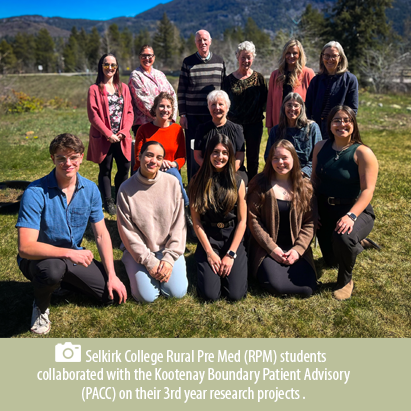
🔶 PACC & Patient Education. Work with the Patient Advisory Committee and Community to bring meaningful patient input to change initiatives, co-governance tables and patient education across the region.

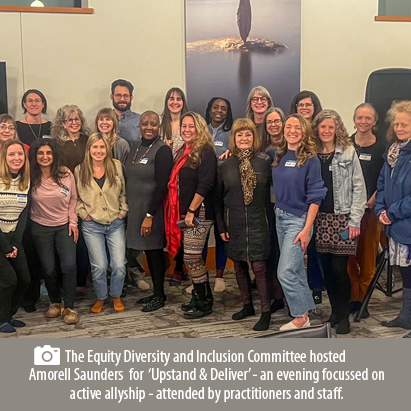
📸 A few 2025-26 snaps featuring our KB Medical Community & Partners 📸
 |  |
 |  |

The Kootenay Boundary Division of Family Practice extends sincere gratitude to all of our members across the region and to our many health care and community partners for your collaboration and shared dedication.
We gratefully acknowledge the funding of the Family Practice Services Committee, Shared Care Committee as well as the support of the Division of Family Practice provincial office and Shared Care central office.
To our passionate physician leads, dedicated committees, patient partners, and skilled contractors - thank you for your contributions and leadership.

With humility and in the spirit of reconciliation, we acknowledge that our work in the Kootenay Boundary region takes place on the traditional, ancestral, and unceded territories of the Sinixt, Syilx, Ktunaxa, and Secwépemc First Nations, and is home to many other diverse Indigenous peoples. We ask for wisdom from the ancestors and keepers of this land as we support all of our Indigenous populations on a journey towards culturally safe care and health equity.