


Welcome to our 2025 Kootenay Boundary Division of Family Practice *virtual* Annual Report. Here, we warmly invite you explore our strategic directions & to learn more about our collective impact over the past year.

 |  |
For more than a decade, our Division has been guided by a fundamental question: What are the most critical challenges impacting family practitioners and their patients? This inquiry has informed our foundational principles, shaped our early collaborative initiatives, and defined our strategic priorities within the constraints of available resources and personnel.
Together, we’ve made real progress. We have championed continuing professional development and recruitment, facilitated the establishment and stabilization of clinical practices, and successfully implemented innovations such as Pathways, Telehealth, In-Patient care, Long-Term Care Quality Improvement, and team-based care models through Primary Care Networks and other initiatives. These examples are just a few of the dozens of projects that have incrementally addressed practitioner challenges, while improving patient care across Kootenay Boundary (KB).
However, the persistent challenge of achieving fair and equitable access to quality primary care remains unresolved. Despite substantial effort and investment, both ours and the broader system's, a significant proportion of Kootenay Boundary residents seeking a practitioner (currently ~13%) are unattached, and many empaneled patients experience delays in accessing timely care. This is not a problem of our own making. It reflects a web of system limits, workforce shortages, demographic shifts, and complex social factors that no single intervention has been able to solve.
The ongoing strain on longitudinal practice is evident. Pressure to expand panel sizes leads to over-paneling, which can compromise timely patient access. These access barriers are correlated with increased utilization of emergency departments for low-acuity presentations. Moreover, these challenging practice conditions impede recruitment and retention in longitudinal care and weaken the core social contract between primary care teams and their communities: good, equitable, and accessible relationship-based care.
In response, early this calendar year, we initiated a focused examination of patient access. We adopted a "desert island thinking" approach, a deliberate shift in perspective that prompts us to consider how primary care delivery in Kootenay Boundary could be redesigned using existing resources, assuming no additional external support.
The outcome of this process is a new Strategic Plan for our Division, centered on a refined and focused “North Star”. By 2028, we aim to ensure that every Kootenay Boundary resident has access to quality primary care. We set this goal not because the path is easy or certain, but because patient access is the defining challenge for our region, our patients, and ourselves as practitioners.

Collaborative Due Diligence:
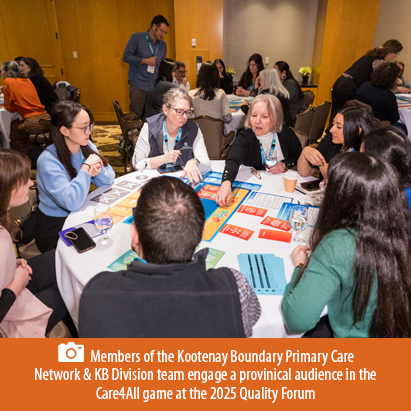
Through structured dialogues, modeling exercises, "even/over" frameworks, and the Care4All Primary Care Game, we have engaged practitioners, partners, community leaders, and patients to identify feasible changes. This process has identified acceptable trade-offs, potential workload redistribution, and strategies for re-engineering primary care delivery from within. The engagements actively involved practitioners in shaping solutions, fostering professional respect, and tapping into our intrinsic motivations to improve patient care.
Enhanced Data-Driven Insights:
Our practitioner-supply modeling shows recruitment by itself won’t close the access gap, even with LFP and current geopolitical tailwind support. Modeling of priority Care4All interventions also shows that modest demand reductions among attached patients (better triage, patient education, less admin, social prescribing) can further narrow the access gap.
Demonstrated Outcomes:
Over 10,000 patients have been attached to a longitudinal practitioner via our KB Health Connect Registry (kbhcr.ca), and our commitment to prioritizing care for complex patients is reflected in the relatively low complexity of those still on the registry. In less than six months, more than 1,100 unique unattached patients have accessed care through the regional KB Access Clinic (kbaccess.ca), utilizing only 1.6 full-time equivalent of practitioner time. These are not pilot initiatives; they are operational changes delivering measurable impact, driven by member commitment. These efforts are driving meaningful change.

Over the next year, our focus will be on three priority actions:
Accelerate Recruitment & Retention
Optimize Clinic Demand & Capacity
Care for Unattached Patients
Our modeling suggests that these initiatives, in conjunction with ongoing Primary Care Network optimization efforts, could generate sufficient capacity to provide quality care for all patients in the region.

This is not the first time access challenges have been raised in our region. What distinguishes this effort is its organic development, rather than a top-down imposition. Our North Star emerged from years of dialogue, reflection, and shared problem-solving. It was shaped by structured engagement, facilitated sessions, and member-led strategy work, ensuring that practitioner voice is central to its messaging, and an agile approach guides its implementation. It is anchored by over 15 years of lived experience and insights from Division members, healthcare and community partners, and residents across Kootenay Boundary.

Skepticism is warranted given the inherent complexity of this challenge and our sustained efforts over many years. There are no easy solutions. However, we possess a clear strategic direction, a shared intent, and a collective commitment to advance.
We extend our gratitude to every member who has contributed ideas, challenged assumptions, participated in project work, and guided the success of our Division's efforts over the past 15 years. As we move forward, we look forward to your continued insight and collaboration in achieving our North Star: ensuring all Kootenay Boundary residents have access to quality primary care by 2028.

📽 This short video highlights these strategic directions and features impacts within our mission to help practitioners meet patient and practice needs, lead change in an evolving primary care system, and work with partners to shape a better future for health care in BC.

A collection of KB Division project highlights from 2024 - 2025 is captured below. Explore a complete snapshot of all current KB Division projects →

🔶 Recruited 11 full-time physicians and 8 locums across the region, while launching new systems — including an Applicant Tracking System and Recruitment & Retention Toolkit — to streamline clinic recruitment, onboarding, and support for incoming practitioners.
🔶 Strengthened retention and belonging through the Community Ambassador program, welcome and networking initiatives, and hands-on support for 15 new practitioners and families as they settled into clinics across the Kootenay Boundary.
🔶 Delivered 34 regional rounds, seven “Dine & Learns,” and three annual conferences, underscoring our ongoing commitment to a strong, region-wide CPD program with 44 events already slated for 2025/2026.
🔶 Supported clinic digital health needs through efficiency reviews and recommendations at two clinics, AI scribe implementation with patient consents, and forms creation across three EMRs.
🔶 Developed new practitioner resources through Shared Care projects, including Live Well! Palliative Care Resources, the Child and Youth Mental Health Resource Matrix, the Child Maltreatment Referral Guideline, and a new referral form for the Kootenay Orthopaedics & Sports Medicine Clinic.

🔶 Advanced Primary Care Network (PCN) optimization, alignment with the provincial PCN refresh, and equitable access to services across the Kootenay Boundary.
🔶 Developed Social Work Task Force recommendations clarifying social worker scope, encounter targets, and patient understanding of the service, with implementation now underway. Currently working on expanded group programming and PT/OT service model reviews to improve access.
🔶 Secured approval for five new-to-practice physician, and two nurse practitioner, and supported clinics in receiving five Nurse in Practice contracts, strengthening regional team-based care capacity.
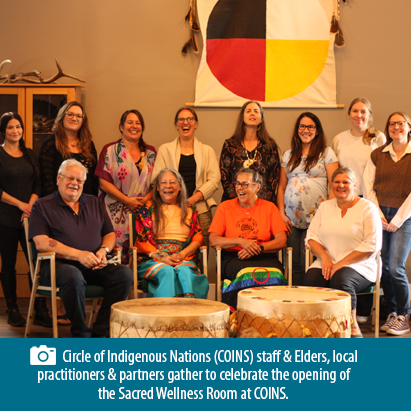
🔶 Delivered nine PCN Learning Labs focused on Care4All themes—including patient education, sorting, collaborative care, and AI in care—alongside monthly Cultural Safety Talking Circles hosted by the Circle of Indigenous Nations Society. Clinic-based team lunches were held in January and February and discipline-specific sessions are conducted monthly.
🔶 Reached a major milestone with our Kootenay Boundary Health Connect Registry (HCR), connecting 10,000 local patients with a family doctor or nurse practitioner since 2022. The HCR continues to guide Ministry funding decisions for new contracts, so it is critical that patients sign up.
🔶 Saw the expansion of primary care access through new and growing services, including:
- KBScreen.ca – preventive screening for unattached patients
- KB Access Clinic – primary care for unattached patients
- Lower Columbia Community Health Centre – opened in Trail in summer 2025
- UPCC Expansion – added new nurse practitioners and allied health
- LVR Health Hub – weekly on-site care for Nelson high school students

🔶 Collaborated with Prima Health, a regional not-for-profit cooperative, to incubate and maintain unique clinic models.
🔶 Opened KB Access in partnership with Shared Care in January 2025. In the first six months of operations, KB Access served over 1,100 unique unattached patients with just under 1.6 FTE of practitioner time.
🔶 Continued operating KB Health Online, an NP-led primary care clinic, and supporting the Boundary clinics with financial and HR resources for their team-based care project.
🔶 Continued advocacy efforts to the Ministry of Health for Community-Led clinics, with a particular focus on the City of Castlegar’s planned new-build clinic and affordable housing project.
 🔶 Reached an estimated 45,000 readers through the Empowering the Citizen Patient series—representing half of the Kootenay Boundary population—via email, social media, and Black Press Media newspapers. Since launch, website traffic to KB PACC’s site has increased by 1,100%. The latest article, published in summer 2025, focused on reducing stigma around palliative care and raising awareness of local resources.
🔶 Released the Surgical Patient Pathway to the public in early 2025, with 13 of 26 clinics (50%) ordering 300 copies for their patients. The next pathway, focused on weight management, is in development for release in early 2026.

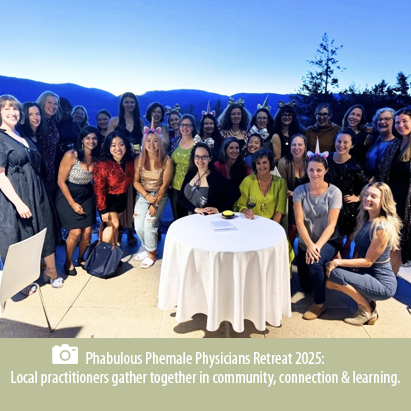
📸 A few 2024-25 snaps featuring our KB Medical Community & Partners 📸
 |  |
 |  |

The Kootenay Boundary Division of Family Practice extends sincere gratitude to all of our members across the region and to our many health care and community partners for your collaboration and shared dedication.
We gratefully acknowledge the funding of the General Practice Services Committee, Shared Care Committee and Innovation Fund as well as the support of the Division of Family Practice provincial office and Shared Care central office.
To our passionate physician leads, dedicated committees, patient partners, and skilled contractors - thank you for your contributions and leadership.

With humility and in the spirit of reconciliation, we acknowledge that our work in the Kootenay Boundary region takes place on the traditional, ancestral, and unceded territories of the Sinixt, Syilx, Ktunaxa, and Secwépemc First Nations, and is home to many other diverse Indigenous peoples. We ask for wisdom from the ancestors and keepers of this land as we support all of our Indigenous populations on a journey towards culturally safe care and health equity.